If you have filed a claim with the U.S. Department of Veterans Affairs (VA), you can check its current status online through the official VA website. The VA claim status tool can show where your claim, decision review, or appeal is in the review process and can also show certain evidence and documents connected with your case.
For disability claims, VA currently lists several stages, including claim received, initial review, evidence gathering, evidence review, rating, preparing the decision letter, final review, and claim decided.
How to Check VA Claim Status Online
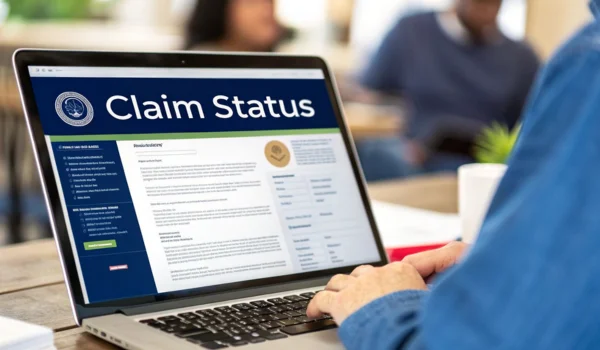
The easiest way to check your VA claim status is through the official VA claim-status tool.
You generally need to sign in to your VA account using an accepted identity-verification method such as Login.gov or ID.me. VA says the online tool allows eligible users to review the status of claims, decision reviews, and appeals.
Once signed in:
- Open the VA claim-status tool.
- Sign in to your VA account.
- Select your claim, decision review, or appeal.
- Review the current status.
- Check whether VA has requested additional evidence.
- Review available documents and decision letters.
What Claims Can You Check?
VA’s current claim-status tool supports several types of benefits, including:
- Disability compensation
- Veterans or Survivors Pension
- Special Monthly Compensation
- Dependency and Indemnity Compensation (DIC)
- Burial allowance
- Specially Adapted Housing (SAH) grants
- Special Housing Adaptation (SHA) grants
The tool can also show certain requests involving dependents.
VA Disability Claim Status Steps
If you have filed a VA disability claim, you may see different stages as the claim moves through the system.
Step 1: Claim Received
This means VA has received your claim and entered it into its system.
Step 2: Initial Review
VA checks the claim for basic information and determines whether additional information is needed.
Step 3: Evidence Gathering
This can be one of the longest parts of the process.
VA may:
- Ask you for additional evidence
- Request medical records
- Schedule a VA claim exam
- Gather records already available to VA
If you submit additional evidence during the process, the claim may move back to evidence gathering for another review.
Step 4: Evidence Review
VA reviews the evidence collected for your claim.
If additional evidence is needed, the claim can move back to evidence gathering.
Step 5: Rating
VA determines the appropriate disability rating based on the evidence and applicable requirements.
VA explains that disability ratings are based on the severity of a service-connected condition and can affect the amount of monthly disability compensation.
Step 6: Preparing Decision Letter
VA prepares the decision letter explaining the result of the claim.
If you qualify for disability compensation, the letter can include information about your disability rating, monthly payment amount, and payment start date.
Step 7: Final Review
A senior reviewer conducts a final review of the claim and decision letter.
Step 8: Claim Decided
Once the claim is decided, you can review the decision through the claim-status tool when the document is available. VA also sends a copy of the decision letter by mail.
How Long Does a VA Claim Take?
There is no single processing time for every VA claim.
The processing time depends on factors such as:
- Type of claim
- Number of disabilities claimed
- Complexity of the case
- Amount of evidence required
- Whether additional examinations are needed
- Whether additional information must be obtained
According to VA’s latest published information, the average time to complete disability-related claims was 71.3 days in June 2026. This is an average and does not guarantee that an individual claim will be completed within that period.
What Does “Evidence Gathering” Mean?
If your VA claim says Evidence Gathering, it generally means VA is still collecting or reviewing information needed to make a decision.
This may include medical records, service records, private medical evidence, or information from a VA claim examination.
Evidence gathering is often the longest stage of the disability-claims process.
What Does “Rating” Mean on a VA Claim?
The Rating stage means VA is determining the disability evaluation based on the available evidence.
VA states that disability ratings represent the severity of a service-connected disability and are used to determine monthly compensation.
If you have multiple service-connected disabilities, VA uses a combined-rating method rather than simply adding the individual percentages together.
What If VA Requests More Evidence?
If VA requests additional evidence, responding as soon as reasonably possible can help keep your claim moving.
VA may request information through its normal communication channels. In 2026, VA also introduced the Claim Assist Portal, which can allow certain claimants to respond electronically when additional information is needed. VA says eligible claimants may receive an email and subsequent text message directing them to the secure portal.
Always be careful with unexpected messages and verify that communications are genuinely from VA before providing personal information.
Can You Upload Evidence Online?
For eligible initial claims, the VA claim-status tool allows users to upload evidence.
However, VA says the tool does not allow evidence uploads for decision reviews or appeals.
Also, documents submitted by mail, fax, or in person may not appear in the online tool. VA specifically notes that some documents are not displayed online because of how they were submitted or because they are restricted for privacy reasons.
What If Your VA Claim Says “Complete”?
A completed status generally means VA has finished the claim and mailed the decision letter.
VA says that if the status is “complete,” the decision letter has already been mailed. It generally takes 7 to 10 business days to arrive, although delivery can take longer. For certain claims and reviews, the decision letter may also be downloadable online.
What If You Disagree With the VA Decision?
If VA has made a decision that you believe is incorrect, you may have options for requesting a review.
VA currently identifies three main decision-review options:
- Supplemental Claim — used when you have new and relevant evidence.
- Higher-Level Review — asks a higher-level reviewer to reconsider the decision; new evidence generally cannot be submitted with this option.
- Board Appeal — asks the Board of Veterans’ Appeals to review the case.
The appropriate option depends on the circumstances of your case and the type and date of the VA decision.
Can You Check a VA Appeal Status?
Yes. The VA online status tool can also be used for eligible decision reviews and appeals.
If you have already requested a decision review or filed an appeal, you can sign in and review its status through VA.gov.
What If Your VA Claim Status Has Not Changed?
A claim may remain at the same stage for some time, particularly when VA is waiting for records, examination results, or other evidence.
A lack of a recent status change does not automatically mean that your claim has been denied or lost.
The timeline can vary based on the complexity of the claim and the evidence VA needs to obtain.
Can You Check VA Claim Status by Phone?
If you need assistance, VA lists 800-827-1000 as the VA benefits hotline. VA’s current information states that the benefits hotline is available Monday through Friday, 8 a.m. to 9 p.m. Eastern Time.
You can also use VA’s online resources and Ask VA options for certain questions and requests.
VA Claim Status vs. VA Payment Status
Your claim status and payment status are not the same thing.
The claim-status tool tells you where your claim or review is in the decision process.
After benefits are awarded, you can separately check information about VA payments and benefit records through VA.gov. VA’s records section provides access to payment-status information for certain benefits.
Frequently Asked Questions
How do I check my VA claim status?
Go to the official VA claim-status page and sign in using an accepted VA account login method. You can then select your claim and review its current status and available details.
What does VA claim status “Evidence Gathering” mean?
It generally means VA is collecting or reviewing evidence needed to decide your claim. This can include medical records, examinations, and other supporting information.
How long does a VA disability claim take?
Processing times vary. VA reported an average of 71.3 days for disability-related claims in June 2026, but individual claims can take longer or shorter depending on their circumstances.
Can I see my VA decision letter online?
For certain types of claims, decision letters can be downloaded through the claim-status tool once they are available. VA also mails decision letters to claimants.
What happens if I disagree with my VA claim decision?
Depending on your situation, you may be able to file a Supplemental Claim, request a Higher-Level Review, or appeal to the Board of Veterans’ Appeals.
Is VA claim status available on a phone?
Yes. You can use VA.gov through a web browser, and VA also provides the VA Health and Benefits app for managing various VA benefits and services.
Final Takeaway
Checking your VA claim status online is the quickest way to see where an eligible claim, decision review, or appeal stands. The official VA tool can show the current stage, evidence information, requests from VA, and certain decision documents.
For disability claims, the process can move through evidence gathering, evidence review, rating, decision preparation, final review, and ultimately a decision. Processing times vary, so a claim remaining at one stage does not necessarily indicate a problem.
For the most accurate information about an individual case, use the official VA claim-status tool rather than relying on third-party websites or social media updates.
Disclaimer: This article is for general informational purposes and is not legal or veterans-benefits advice. VA procedures and processing times can change. Always verify information about your individual claim directly through VA.gov or with an authorized VA representative.