A quitclaim deed in Florida is a legal document used to transfer whatever ownership interest one person may have in real property to another person. Unlike a warranty deed, a quitclaim deed generally does not provide the same type of title warranties.
Quitclaim deeds are often used for transfers between family members, adding or removing someone from title, transfers between spouses, correcting ownership arrangements, or other situations where the parties already understand the property’s ownership.
Florida law specifically provides a statutory form for quitclaim deeds under Florida Statutes §689.025.
What Is a Quitclaim Deed in Florida?
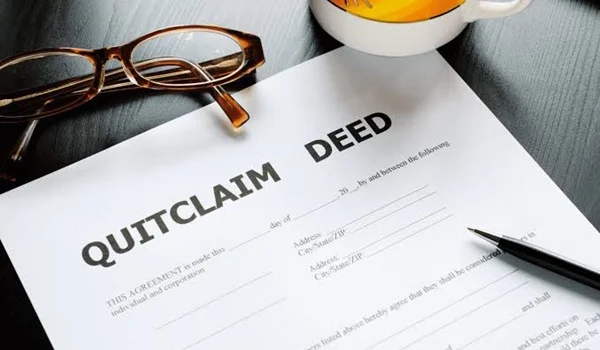
A quitclaim deed transfers the grantor’s right, title, interest, claim, and demand in the property to the grantee.
The important point is that the grantor is generally transferring whatever interest they actually have. A quitclaim deed does not function like a warranty that the grantor has clear and complete title.
For example, suppose John owns an interest in a Florida property and wants to transfer that interest to Mary. John may execute a quitclaim deed conveying his interest to Mary.
If John does not actually own an interest in the property, however, the quitclaim deed generally does not magically create ownership that John did not possess.
Florida Quitclaim Deed Requirements
Florida law provides a prescribed form for a quitclaim deed.
Among other things, the deed should identify:
- The date of execution
- Grantor
- Grantor’s address
- Grantee
- Grantee’s address
- Consideration
- County where the property is located
- Legal description of the property
- Parcel identification number information
Florida law specifically requires the legal description of the real property to appear on the instrument. The parcel identification number cannot substitute for the legal description.
Does a Florida Quitclaim Deed Need Two Witnesses?
Yes. Florida’s real-property conveyance statute generally requires an instrument transferring an interest in real property to be signed in the presence of two subscribing witnesses.
The execution and acknowledgment requirements are important because an improperly executed deed can create problems when the document is presented for recording or later relied upon as evidence of ownership.
Because deed requirements can be technical, having a Florida real-estate attorney or qualified title professional review the document can be useful, particularly for complicated transfers.
Does a Quitclaim Deed Need to Be Notarized in Florida?
A quitclaim deed should be properly acknowledged and notarized for recording.
Florida’s deed-execution rules involve both witnesses and acknowledgment requirements. The exact execution process should be followed carefully before submitting the deed to the county recording office.
Electronic documents and electronic notarization can also be subject to Florida’s recording laws.
How to File a Quitclaim Deed in Florida
The general process is:
- Prepare the Deed
Prepare the quitclaim deed using the required information and the property’s correct legal description.
- Identify the Grantor and Grantee
The person transferring the interest is the grantor.
The person receiving the interest is the grantee.
Make sure names are spelled correctly and consistently with the relevant property records.
- Include the Legal Description
Obtain the property’s legal description from an existing deed or official property records.
Do not rely solely on a street address or parcel number.
Florida law specifically requires the legal description on the quitclaim deed.
- Sign in the Required Manner
The grantor must execute the deed according to Florida’s applicable witnessing and acknowledgment requirements.
- Record the Deed
The deed should generally be recorded with the official records of the Florida county where the property is located.
Recording provides an important public record of the transfer. Florida’s recording statute addresses the effect of recording conveyances against creditors and subsequent purchasers.
How Much Does a Quitclaim Deed Cost in Florida?
The cost can include several different expenses:
- Document preparation
- Notary fees
- Witness-related costs, if applicable
- County recording fees
- Documentary stamp tax, when applicable
- Attorney or title-company fees
There is no single statewide total cost for every quitclaim deed because recording charges and other expenses can vary.
Florida Documentary Stamp Tax
Florida imposes documentary stamp tax on certain documents transferring an interest in Florida real property.
The Department of Revenue explains that the tax is generally calculated based on the consideration involved in the transfer.
Whether documentary stamp tax applies, and how it is calculated, can depend on the circumstances of the transaction.
Can You Use a Quitclaim Deed to Transfer Property to a Family Member?
Yes, quitclaim deeds are commonly associated with transfers between people who already know and trust each other, including certain family transfers.
For example, a quitclaim deed might be used when:
- A parent transfers an interest to a child
- One family member transfers an interest to another
- Spouses change ownership arrangements
- A person transfers an interest to a trust
- Co-owners restructure ownership
However, the fact that the parties are related does not automatically eliminate tax, mortgage, homestead, or other legal considerations.
Quitclaim Deed Between Spouses in Florida
A quitclaim deed may be used in certain transfers between spouses, including situations involving changes in title.
However, transferring title does not necessarily:
- Remove someone from a mortgage
- Eliminate existing liens
- Change all tax obligations
- Automatically change homestead status
- Resolve ownership disputes
A deed and a mortgage are separate legal matters.
If both spouses are borrowers on a mortgage, transferring one person’s ownership interest does not necessarily release that person from their obligations under the loan.
Quitclaim Deed and Mortgage
This is one of the most important issues to understand.
A quitclaim deed transfers an ownership interest; it generally does not by itself transfer or eliminate a mortgage obligation.
For example, if John and Mary jointly own a home and both are borrowers on the mortgage, John might quitclaim his ownership interest to Mary. That does not necessarily mean the lender has released John from the mortgage.
Anyone considering such a transfer should review the mortgage documents and, where necessary, speak with the lender or a real-estate attorney.
Quitclaim Deed vs. Warranty Deed in Florida
| Feature | Quitclaim Deed | Warranty Deed |
| Transfers grantor’s interest | Yes | Yes |
| Title warranty | Generally limited/no warranty | Provides specified title covenants |
| Common use | Certain transfers between parties who know the ownership situation | Traditional property sales |
| Title protection | More limited | Generally greater protection |
| Title research | Still important | Still important |
Florida law separately provides statutory forms for quitclaim and warranty deeds.
Can a Quitclaim Deed Remove Someone From a Deed?
Potentially, yes.
If a person currently appears as an owner and properly executes a deed transferring their interest to another party, the recorded deed can change the ownership record.
However, the precise effect depends on the existing ownership structure and the language of the deed.
For example, removing one co-owner from title may be different from transferring the entire property.
Can a Quitclaim Deed Transfer a House With a Mortgage?
A quitclaim deed can potentially transfer an ownership interest in property that has a mortgage, but the deed does not automatically eliminate the mortgage.
The lender may still have rights under the loan documents.
Before transferring mortgaged property, it is important to understand:
- Who is on the mortgage
- Who is on the deed
- Whether the loan permits the proposed transfer
- Whether lender approval is needed
- Whether the transfer affects due-on-sale provisions
- Whether the new owner assumes any loan obligations
Can You Reverse a Quitclaim Deed in Florida?
A quitclaim deed cannot simply be treated as if it never happened because one party changes their mind.
If all relevant parties agree, another deed may potentially be used to transfer the interest back. But if the transfer is disputed, issues such as fraud, forgery, duress, undue influence, incapacity, or other legal grounds may become relevant.
Florida law expressly recognizes that recording rules do not prevent challenges based on matters such as fraud, forgery, impersonation, duress, incapacity, undue influence, or illegality.
A disputed deed may require legal advice or court proceedings.
Do You Need a Lawyer for a Florida Quitclaim Deed?
A lawyer is not necessarily required for every quitclaim deed.
However, legal assistance can be particularly useful when:
- The property is jointly owned
- The property is mortgaged
- There is a divorce
- An estate is involved
- The transfer involves a trust
- There are tax concerns
- There is an ownership dispute
- The property is homestead property
- Someone is being pressured to sign
- The title history is complicated
A simple family transfer can be very different from a disputed property transaction.
Common Mistakes With Florida Quitclaim Deeds
Some common problems include:
Using the Wrong Legal Description
A street address alone may not satisfy the legal-description requirement.
Incorrect Names
Misspelled or incomplete names can create title problems.
Missing Witnesses
Florida’s real-property conveyance rules require two subscribing witnesses in the circumstances covered by the statute.
Failing to Record the Deed
An executed deed and a recorded deed are not necessarily the same thing for purposes of protecting interests against third parties.
Ignoring the Mortgage
Changing title does not automatically remove someone from a mortgage.
Assuming There Are No Taxes
A transfer may have documentary stamp tax consequences depending on the consideration and circumstances.
Frequently Asked Questions
What is a quitclaim deed in Florida?
It is a deed used to transfer the grantor’s interest in real property without the type of title warranties typically associated with a warranty deed.
Does Florida have a quitclaim deed form?
Florida Statutes §689.025 provides a prescribed form for quitclaim deeds.
How many witnesses are required for a Florida quitclaim deed?
Florida’s general real-property conveyance statute requires two subscribing witnesses for the covered conveyances.
Does a quitclaim deed transfer ownership?
It can transfer the grantor’s interest in the property, assuming the deed is properly executed and otherwise legally effective.
Does a quitclaim deed remove someone from a mortgage?
Generally, no. A deed and a mortgage are separate legal instruments.
Does a quitclaim deed need to be recorded?
Recording is important for establishing public notice and protecting interests against certain creditors and subsequent purchasers under Florida’s recording laws.
Can I prepare a quitclaim deed myself?
It is possible to prepare one, but property transfers can have significant legal and tax consequences. Professional review may be worthwhile when the circumstances are complicated.
How much does a quitclaim deed cost in Florida?
There is no single universal cost. Expenses can include recording charges, documentary stamp tax where applicable, notarization, document preparation, and professional fees.
Related Search Terms
- Florida quit claim deed
- quitclaim deed Florida
- Florida quitclaim deed form
- quitclaim deed form Florida
- how to file a quitclaim deed in Florida
- Florida quitclaim deed requirements
- quitclaim deed Florida cost
- quitclaim deed Florida recording
- quitclaim deed Florida notarized
- quitclaim deed Florida two witnesses
- quitclaim deed between family members Florida
- quitclaim deed between spouses Florida
- quitclaim deed to remove someone from deed
- quitclaim deed and mortgage Florida
- Florida quitclaim deed tax
- Florida quitclaim deed lawyer
- quitclaim deed property transfer Florida
- how to transfer property with quitclaim deed
- quitclaim deed vs warranty deed Florida
Conclusion
A Florida quitclaim deed can be a useful way to transfer an ownership interest, particularly when the parties understand the property’s ownership situation. However, proper execution, the legal description, witnessing, recording, taxes, and any existing mortgage should all be considered before signing.
For complicated or disputed transfers, a Florida real-estate attorney or qualified title professional can help determine whether a quitclaim deed is appropriate.
Legal Disclaimer: This article provides general legal information and is not legal advice. Florida real-estate laws and individual circumstances can affect the validity and consequences of a property transfer. Consult a qualified Florida real-estate attorney for advice about a specific quitclaim deed or property transaction.