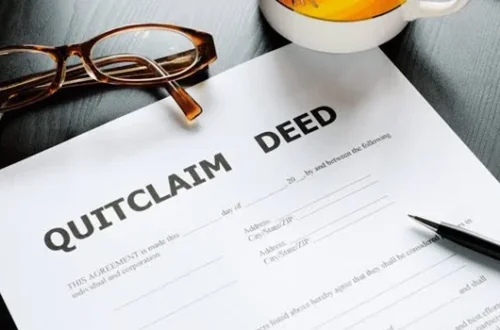
If you are searching for “quick claim deed,” you may actually mean “quitclaim deed.” A quitclaim deed is a legal document used in the United States to transfer whatever ownership interest a person may have in real estate to another person.
It is called a quitclaim deed, not a “quick claim deed.”
Unlike a warranty deed, a quitclaim deed generally does not guarantee that the person transferring the property actually owns the property or that the title is free of other claims.
What Is a Quitclaim Deed?
A quitclaim deed transfers the grantor’s interest in a property to the grantee.
The basic idea is:
Grantor → transfers existing interest → Grantee
The grantor is the person giving up or transferring the interest.
The grantee is the person receiving the interest.
A quitclaim deed can be useful when the parties already understand the ownership situation and do not need the warranties normally associated with a warranty deed.
Why Is It Called a Quitclaim Deed?
The word “quitclaim” refers to giving up or releasing whatever interest the grantor may have in the property.
For example, imagine two people were previously married and one spouse wants to remove their ownership interest from a home. A quitclaim deed may be used as part of that process.
However, the deed itself does not automatically resolve every issue involving:
- Mortgages
- Liens
- Taxes
- Ownership disputes
- Other title problems
Those matters may require separate action.
How Does a Quitclaim Deed Work?
The process generally involves several steps.
- Prepare the Deed
The document identifies the property and the parties involved.
- Identify the Grantor
The grantor is the person transferring their interest.
- Identify the Grantee
The grantee is the person receiving the interest.
- Describe the Property
The deed normally includes the property’s legal description.
A street address alone may not be sufficient for recording purposes in every jurisdiction.
- Sign the Document
The grantor signs the deed according to the applicable state requirements.
Some states require notarization and/or witnesses.
- Record the Deed
The completed deed is generally recorded with the appropriate county or local land-records office.
Recording requirements and fees vary by state and locality.
Quitclaim Deed Example
Suppose John owns an interest in a house and wants to transfer that interest to Sarah.
A simplified example could look like:
John Smith, as Grantor, hereby quitclaims to Sarah Smith, as Grantee, any right, title, and interest the Grantor may have in the property described in this deed.
The actual legal document would need the appropriate property description, signatures, acknowledgments, and other information required by the relevant jurisdiction.
This example is only for explanation and is not a complete legal form.
When Is a Quitclaim Deed Used?
Quitclaim deeds are commonly associated with situations where the parties have an existing relationship or already understand the property’s ownership.
Possible situations include:
Transferring Property Between Family Members
A parent may transfer an interest in property to an adult child, for example.
Divorce-Related Transfers
A spouse may transfer their interest in jointly held real estate to the other spouse.
Adding or Removing a Spouse
A quitclaim deed may sometimes be used when ownership needs to be changed after marriage or divorce.
Correcting Certain Ownership Issues
A quitclaim deed can sometimes be used to address questions about an individual’s claimed interest in property.
Transfers Into Certain Entities
Depending on state law and the circumstances, property may sometimes be transferred to an LLC, trust, or other entity.
The appropriate deed and tax treatment can vary significantly depending on the transaction.
Quitclaim Deed vs. Warranty Deed
The biggest difference is the level of title protection provided.
| Quitclaim Deed | Warranty Deed |
| Transfers the grantor’s interest | Transfers property with specified warranties |
| Generally provides no title warranties | Provides greater title assurances |
| Often used between people who know each other | Common in conventional property sales |
| May be simpler | Usually provides more buyer protection |
| Does not guarantee clear title | Warranties can provide protection against certain title claims |
The exact warranties depend on the type of deed and state law.
Does a Quitclaim Deed Prove Ownership?
Not necessarily.
This is one of the most important things to understand.
A quitclaim deed generally transfers whatever interest the grantor actually has.
If the grantor has no ownership interest, signing a quitclaim deed generally does not create ownership simply because the document was signed.
For example, if someone who has no legal interest in a property signs a quitclaim deed claiming to transfer the property, the grantee should not assume that the deed automatically gives them valid ownership.
Does a Quitclaim Deed Remove Someone From a Mortgage?
Generally, no.
A quitclaim deed and a mortgage are separate matters.
Suppose two spouses jointly own a house and both are borrowers on the mortgage. One spouse signs a quitclaim deed transferring their property interest to the other spouse.
That does not automatically release the transferring spouse from the mortgage debt.
The lender’s agreement may be necessary to remove a borrower from the loan.
This distinction is extremely important in divorce and property transfers.
Does a Quitclaim Deed Remove a Name From the House?
It can transfer a person’s ownership interest, but the exact effect depends on the deed, title records, state law, and circumstances.
A person should not assume that signing the deed automatically resolves every legal or financial obligation connected with the property.
For complicated ownership situations, a real-estate attorney or qualified title professional can help determine the appropriate procedure.
How Much Does a Quitclaim Deed Cost?
There is no single nationwide price.
Costs can include:
- Document preparation
- Notary fees
- Recording fees
- Transfer taxes
- Documentary taxes
- Title-related expenses
- Attorney fees
Some states or counties impose taxes or exemptions depending on the type of transfer.
Therefore, the cost should be checked with the appropriate county recorder, clerk, register of deeds, or local real-estate professional.
Do You Need a Lawyer for a Quitclaim Deed?
Not necessarily.
A lawyer is not always legally required to prepare a quitclaim deed.
However, professional advice can be valuable when the transfer involves:
- Divorce
- Inheritance
- Multiple owners
- A mortgage
- Liens
- Estate planning
- Trusts
- Business entities
- Disputed ownership
- Significant property value
A small mistake in a property document can create substantial problems later.
What Information Is Usually Included?
A quitclaim deed commonly contains information such as:
- Grantor’s legal name
- Grantee’s legal name
- Property legal description
- County and state
- Consideration, when applicable
- Signature of the grantor
- Notary acknowledgment
- Recording information
Requirements differ by state and county, so a generic online form may not satisfy every local requirement.
Does a Quitclaim Deed Transfer Property Immediately?
Not necessarily.
The legal effect and timing depend on applicable state law and the circumstances of the transfer.
In many situations, recording the properly executed deed is an important part of establishing the public record of the transfer.
You should check the requirements of the state and county where the property is located.
Can a Quitclaim Deed Be Reversed?
There is no universal rule that allows a grantor to simply “undo” a quitclaim deed.
If both parties agree, a subsequent deed may potentially be used to transfer the property back.
If the parties disagree, reversing or challenging the transfer may require a legal proceeding.
The answer depends heavily on state law and the facts surrounding the original deed.
Important Risks of a Quitclaim Deed
Before signing one, understand the potential risks.
No Guarantee of Clear Title
The grantee generally receives no warranty that the grantor has good and marketable title.
Existing Liens May Remain
A quitclaim deed does not automatically eliminate liens or other encumbrances.
Mortgage Liability May Continue
Transferring ownership does not necessarily eliminate responsibility for a mortgage.
Tax Consequences May Apply
Some transfers can have federal, state, or local tax consequences.
Errors Can Cause Problems
Incorrect names, legal descriptions, signatures, notarization, or recording procedures can create complications.
Frequently Asked Questions
Is “quick claim deed” the correct term?
No. The commonly used legal term is quitclaim deed.
What does a quitclaim deed do?
It generally transfers whatever ownership interest the grantor has in a particular property to the grantee, without the title warranties commonly associated with a warranty deed.
Does a quitclaim deed give you ownership?
Only to the extent that the grantor actually has a transferable interest. A quitclaim deed does not guarantee that the grantor owns the property.
Can a quitclaim deed remove someone from a mortgage?
Generally, no. A deed transfers an ownership interest, while a mortgage creates a debt obligation. The lender may need to approve any change to the borrowers.
Is a quitclaim deed good for selling a house?
It can be used in some transactions, but it provides considerably less title protection to the buyer than a warranty deed. The appropriate deed depends on the circumstances and state law.
Do quitclaim deeds need to be notarized?
Notarization requirements vary by state and local recording rules. Check the requirements where the property is located.
Final Takeaway
A quitclaim deed is a real-estate document used to transfer a person’s existing interest in property without the title warranties generally provided by a warranty deed.
It can be useful for certain transfers between family members, spouses, trusts, or other parties who understand the property’s ownership situation. However, it should not be treated as a simple way to eliminate mortgages, liens, taxes, or other legal obligations.
Because real-estate deed requirements vary by state, anyone preparing or signing a quitclaim deed should verify the applicable county and state requirements and consider professional legal advice when the transaction involves significant property rights or financial obligations.
Disclaimer: This article provides general educational information about quitclaim deeds in the United States. It is not legal advice, and state-specific requirements can differ.