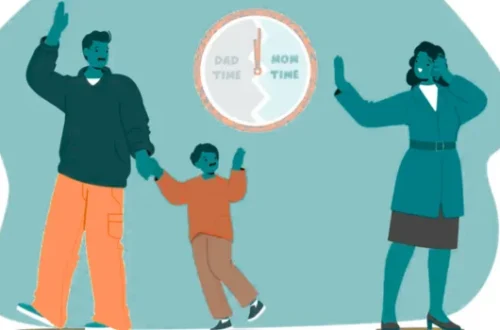
Child custody disputes can become especially complicated when parents live in different states. Questions quickly arise such as: Which state has the authority to decide custody? or What happens if one parent moves the child to another state without permission?
To solve these problems, most states in the United States follow a law called the Uniform Child Custody Jurisdiction and Enforcement Act (UCCJEA).
This law helps courts determine which state has the power to make child custody decisions and ensures those decisions are respected across state lines.
In this guide, we’ll explain how the UCCJEA works, why it was created, and what parents need to know.
What Is the Uniform Child Custody Jurisdiction and Enforcement Act?
The UCCJEA is a law designed to prevent conflicting custody orders between different states.
Before this law existed, it was possible for two courts in different states to issue different custody decisions about the same child. This created confusion, stress for families, and sometimes encouraged parents to move children to another state hoping for a more favorable ruling.
The UCCJEA solves this problem by establishing clear rules about which state’s court has jurisdiction, meaning the legal authority to decide custody matters.
Today, almost every U.S. state has adopted the UCCJEA, making custody decisions more consistent across the country.
Why the UCCJEA Was Created
The main purpose of the UCCJEA is to protect children and prevent parents from manipulating the legal system.
Before this law was introduced, some parents engaged in a practice known as “forum shopping.”
This meant:
- A parent would take a child to another state
- File a custody case there
- Hope that court would give them a better outcome
This sometimes led to parental kidnapping situations, where a child was moved without permission during custody disputes.
The UCCJEA helps prevent these situations by clearly deciding which state has the right to hear the case first.
The “Home State” Rule
One of the most important concepts in the UCCJEA is the home state rule.
A child’s home state is usually defined as:
The state where the child has lived with a parent for at least six consecutive months before the custody case begins.
For example:
- If a child has lived in Texas for the last year, Texas is the home state.
- If one parent suddenly moves the child to another state and files for custody there, the new state usually cannot take the case.
Instead, the case must be handled by the home state court.
This rule helps prevent parents from moving children simply to gain an advantage in court.
When a State Can Make a Custody Decision
Under the UCCJEA, a court generally has authority to make a custody decision if one of the following applies.
- Home State Jurisdiction
This is the most common situation.
The state where the child has lived for the last six months typically has the right to decide custody.
- Significant Connection Jurisdiction
If no state qualifies as the home state, a court may still handle the case if:
- The child and parents have strong connections to that state, and
- Important evidence about the child’s life exists there
For example:
- The child attends school there
- Doctors, teachers, and relatives live there
- Emergency Jurisdiction
A court can take temporary action if a child is in immediate danger.
This may apply in cases involving:
- Abuse
- Neglect
- Abandonment
- Domestic violence
Emergency orders are usually temporary until the proper court takes control of the case.
- Default Jurisdiction
If no other state has jurisdiction, a court may step in simply because no other court is available to decide the matter.
Continuing Jurisdiction
Another key feature of the UCCJEA is continuing jurisdiction.
Once a state court makes a custody decision, that state usually keeps authority over the case.
This means another state generally cannot change the custody order unless:
- The child and parents no longer live in the original state, or
- The original court decides it is no longer the best place to handle the case.
This rule prevents parents from constantly trying to move custody battles to different courts.
Enforcement of Custody Orders Across States
The UCCJEA also ensures that custody orders are recognized and enforced in other states.
For example:
- A custody order issued in California must be respected in Florida.
- A parent cannot simply move to another state and ignore the order.
Courts can enforce custody orders by:
- Ordering the return of a child
- Working with law enforcement
- Issuing warrants in extreme situations
This nationwide cooperation helps maintain consistency and stability for children.
What Happens in Interstate Custody Disputes?
Sometimes parents live in different states and both try to file custody cases.
Under the UCCJEA, courts must communicate with each other to determine which state should handle the case.
Judges may review factors such as:
- Where the child has lived the longest
- Where key evidence is located
- Which court started the case first
This coordination helps prevent two courts making conflicting decisions.
Parental Kidnapping and the UCCJEA
The UCCJEA plays an important role in preventing parental kidnapping.
If a parent takes a child to another state to avoid a custody order, courts can use the law to:
- Enforce the existing order
- Return the child quickly
- Prevent new custody cases from being filed in the new state
The law works together with federal statutes to protect children from being wrongfully removed from their home state
What Parents Should Know About the UCCJEA
If you are involved in a custody case involving more than one state, there are several important things to keep in mind.
Moving to Another State Doesn’t Automatically Change Custody
Even if a parent moves with a child, the original state may still control the custody case.
Filing First in Another State May Not Work
Courts will usually defer to the home state, even if another parent files somewhere else first.
Emergency Orders Are Temporary
If a child is in danger, another state can issue a temporary order—but the long-term decision still belongs to the correct court.
Court Communication Is Common
Judges in different states may communicate directly to determine jurisdiction.
Why the UCCJEA Is Important for Families
The UCCJEA provides several major benefits.
It helps:
- Prevent custody conflicts between states
- Protect children from parental abduction
- Create consistent custody rulings
- Reduce legal confusion for families
Most importantly, it ensures that custody decisions are made in the location most connected to the child’s life.
Final Thoughts
The **Uniform Child Custody Jurisdiction and Enforcement Act plays a crucial role in modern family law. By establishing clear rules about which state has authority over custody matters, it prevents legal chaos and protects children from being caught in interstate disputes.
For parents navigating custody issues across state lines, understanding the UCCJEA can help avoid costly legal battles and ensure that custody decisions remain stable and fair.
At the end of the day, the law focuses on one key goal: protecting the best interests and stability of the child.