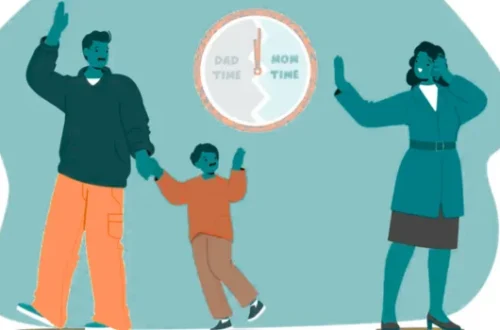
When parents go through separation or divorce, emotions run high — especially when it comes to custody. Many parents enter court believing they should receive full custody. But in reality, courts across the United States grant sole or “full” custody far less often than people expect.
If you are wondering why a judge did not award full custody — or why it may be difficult to obtain — this guide will explain the most common reasons in simple, easy-to-understand language.
Whether you are a concerned parent or a legal professional preparing a case, understanding these factors can make a major difference.
First: What Does “Full Custody” Mean?
In everyday language, full custody usually refers to:
- Sole physical custody (the child lives primarily with one parent)
- Sole legal custody (one parent makes major decisions alone)
However, most courts prefer some form of shared parenting unless there is a serious reason not to.
The guiding rule in every state is:
The Best Interests of the Child

Judges do not decide custody based on who “deserves” it. They focus on what arrangement supports the child’s safety, stability, and emotional well-being.
Now let’s explore the most common reasons parents do not receive full custody
- Both Parents Are Considered Fit
The most common reason a parent does not receive full custody is simple:
The court believes both parents are capable and safe.
If there is no evidence of abuse, neglect, substance abuse, or serious instability, courts generally favor:
- Joint legal custody
- Shared physical custody
- Structured parenting time
Modern family courts strongly support children having relationships with both parents.
If both parents are involved, responsible, and stable, full custody is unlikely.
- Lack of Evidence of Harm
Many parents feel the other parent is irresponsible or difficult. But feelings are not enough in court.
Judges require proof.
Examples of weak arguments:
- “They’re not as involved as I am.”
- “They don’t parent the way I do.”
- “They make different rules at their house.”
Unless those differences create real harm, courts usually will not remove custody rights.
Strong custody cases require documentation, such as:
- Police reports
- CPS records
- Medical documentation
- School attendance problems
- Drug test results
Without evidence, courts are reluctant to award sole custody.
- Appearing Unwilling to Co-Parent
Judges look closely at each parent’s ability to cooperate.
If a parent:
- Refuses to communicate
- Frequently blocks visitation
- Speaks negatively about the other parent
- Uses the child as a messenger
- Tries to control the other parent
The judge may view that parent as unwilling to support a healthy co-parenting relationship.
Ironically, trying too hard to exclude the other parent can hurt your own case.
Courts want to see maturity, not conflict.
- Violating Existing Court Orders
If you:
- Ignore visitation schedules
- Withhold the child without legal grounds
- Fail to follow court instructions
- Move without permission
The judge may question your respect for the legal system.
Even if you believe you are protecting your child, acting outside the law can damage your credibility.
Credibility matters greatly in custody cases.
- Lack of Stability
Stability is one of the most important factors in custody decisions.
Judges evaluate:
- Housing stability
- Employment consistency
- School continuity
- Living environment
- Daily routines
If a parent has:
- Frequent moves
- Unstable housing
- Job instability
- Chaotic home life
The court may hesitate to grant full custody.
It is not about wealth — it is about consistency.
- Substance Abuse or Criminal History
If the parent seeking full custody has:
- Drug or alcohol problems
- Recent DUI charges
- Domestic violence history
- Ongoing criminal issues
The court may view that parent as higher risk.
Even if the other parent has flaws, the judge compares both sides.
Custody is often about which parent provides greater stability and safety.
- Domestic Violence by the Requesting Parent
If there is evidence of:
- Past family violence
- Protective orders
- Aggressive behavior
Courts may deny full custody to the parent with the violence history.
Many states have strong laws preventing custody awards to abusive parents unless specific conditions are met.
- The Child’s Preference (in Some Cases)
In many states, older children can express their preferences.
If a mature teenager expresses a desire to live primarily with the other parent, the judge may consider that.
However:
- The child’s choice is rarely the only deciding factor.
- The court evaluates maturity and reasoning.
Still, it can influence the outcome.
- Weak Legal Strategy or Poor Court Presentation
Sometimes custody cases are lost due to:
- Poor preparation
- Lack of documentation
- Emotional testimony instead of facts
- Inconsistent statements
- Inexperienced legal representation
Judges rely on organized, credible evidence.
Emotional arguments without structure rarely succeed.
- Attempting to Use Custody to Control Child Support
Courts separate custody and child support issues.
If a parent appears motivated by:
- Increasing child support
- Reducing payments
- Financial control
It can weaken their credibility.
Custody decisions are about parenting — not money.
- Parental Alienation Concerns
If a parent attempts to damage the child’s relationship with the other parent, courts may see that as harmful behavior.
Examples include:
- Telling the child the other parent is bad
- Blocking communication
- Coaching the child to make accusations
Judges take alienation seriously and may deny full custody for this reason.
- No Significant Change in Circumstances (Modification Cases)
If custody was already decided and you are trying to modify it, you must usually show:
- A material and substantial change in circumstances
Without a major change (such as relocation, abuse, instability), courts will not easily alter custody arrangements.
Stability for the child is prioritized.
Practical Advice for Parents
If you did not receive full custody, consider:
- Focus on improving co-parenting skills.
- Follow court orders strictly.
- Keep communication calm and child-focused.
- Document serious concerns properly.
- Avoid emotional confrontations.
- Provide a stable, structured home environment.
Custody arrangements can sometimes be modified later if circumstances change significantly.
Advice for Law Practices
For family law professionals:
- Set realistic expectations early.
- Evaluate both parents objectively.
- Avoid filing weak sole custody claims.
- Emphasize documented evidence.
- Prepare clients for cross-examination.
- Address credibility risks in advance.
Courts increasingly favor shared parenting models unless clear harm is demonstrated.
Final Thoughts
Not receiving full custody does not mean you are a bad parent. In most cases, it simply means the court believes both parents can contribute positively to the child’s life.
Full custody is typically reserved for situations involving:
- Safety risks
- Abuse or neglect
- Severe instability
- Significant parental dysfunction
The strongest custody cases are built on:
- Evidence
- Stability
- Cooperation
- Child-focused thinking
- Respect for the legal process
If you are concerned about your custody situation, consult a qualified family law attorney in your state. Every case is unique, and state laws vary.
At the end of the day, courts are not looking for perfection.
They are looking for the arrangement that best supports the child’s safety, emotional health, and long-term stability.
When parents shift their focus from “winning” to “protecting,” better outcomes often follow.