When people hear the word “law,” they often think about dramatic courtroom trials, police investigations, or lawsuits between individuals. But in the U.S. legal system, most legal matters fall into two major categories: criminal law and civil law.
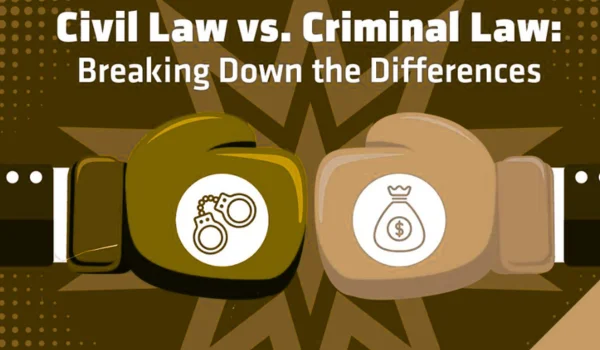
Understanding the difference between these two areas of law is important because they deal with very different kinds of problems, procedures, and outcomes. While criminal law focuses on crimes against society, civil law deals with disputes between individuals or organizations.
This article explains the difference in simple terms so everyday readers can understand how the system works.
What Is Criminal Law?
Criminal law deals with actions that are considered offenses against society or the public.
When someone commits a serious wrongdoing—such as theft, assault, or fraud—the government prosecutes the person because the act is considered harmful to the community as a whole.
In the United States, criminal law is enforced by government agencies such as the Federal Bureau of Investigation and prosecuted by attorneys working for offices like the U.S. Department of Justice.
Examples of Criminal Cases
Some common criminal offenses include:
- Murder
- Assault and battery
- Robbery
- Drug trafficking
- Fraud and identity theft
- Domestic violence
If a person is found guilty of a crime, the court may impose penalties such as:
- Jail or prison time
- Fines
- Probation
- Community service
The goal of criminal law is to punish wrongdoing, protect society, and deter future crimes.
What Is Civil Law?
Civil law deals with disputes between individuals, businesses, or organizations.
Instead of punishing someone with jail time, civil law focuses on resolving conflicts and compensating people who have been harmed.
Civil cases are typically filed by private individuals or companies rather than the government.
Examples of Civil Cases
Civil law covers a wide range of disputes, such as:
- Personal injury claims
- Breach of contract
- Property disputes
- Family law issues like divorce
- Consumer protection cases
For example, if someone is injured in a car accident due to another driver’s negligence, they may file a civil lawsuit seeking financial compensation.
The goal of civil law is to make the injured party “whole” again, usually through monetary damages.
Who Brings the Case?
One of the biggest differences between criminal and civil law is who files the case.
Criminal Cases
In criminal law, the case is brought by the government.
For example, a criminal case might be titled:
State of California v. John Smith
This means the government is prosecuting the accused person for violating the law.
Civil Cases
In civil law, the case is usually filed by a private individual or organization.
A typical civil case might look like:
Jane Smith v. ABC Construction Company
Here, one party is suing another for damages or a legal remedy.
Different Standards of Proof
Another major difference is how much evidence is required to win a case.
Criminal Cases: Beyond a Reasonable Doubt
In criminal law, prosecutors must prove guilt beyond a reasonable doubt.
This is the highest standard of proof in the legal system because a person’s freedom is at stake.
If the jury has serious doubt about whether the defendant committed the crime, they must find the defendant not guilty.
Civil Cases: Preponderance of the Evidence
Civil cases have a lower standard called preponderance of the evidence.
This simply means the judge or jury believes it is more likely than not that one side is telling the truth.
In other words, if the evidence slightly favors one party, that party can win the case.
Possible Outcomes
Criminal and civil cases also have very different outcomes.
Criminal Law Outcomes
If someone is convicted of a crime, possible penalties include:
- Prison or jail
- Probation
- Fines
- Loss of certain rights
These punishments are meant to hold offenders accountable and protect society.
Civil Law Outcomes
Civil cases usually result in:
- Financial compensation (damages)
- Court orders requiring someone to act or stop acting in a certain way
- Contract enforcement
No one goes to jail in civil court.
Can One Event Lead to Both Types of Cases?
Yes, sometimes the same incident can lead to both criminal and civil cases.
A famous example is the case involving O. J. Simpson.
He faced criminal charges related to the O. J. Simpson murder trial and was found not guilty in criminal court.
However, the victims’ families later filed a civil lawsuit, and Simpson was found liable and ordered to pay damages.
This example shows how criminal and civil law can operate separately, even when they involve the same event.
Different Goals of Each Legal System
Understanding the purpose behind each system makes the difference clearer.
Purpose of Criminal Law
Criminal law aims to:
- Protect public safety
- Punish offenders
- Prevent future crimes
Because crimes affect society as a whole, the government takes responsibility for prosecuting offenders.
Purpose of Civil Law
Civil law focuses on:
- Resolving disputes
- Compensating victims
- Enforcing legal rights
It is primarily about fairness and financial responsibility, rather than punishment.
Who Decides the Case?
Both types of cases may involve judges and juries, but the process can vary.
Criminal Trials
Most serious criminal cases involve:
- A judge
- A jury
- Prosecutors
- Defense attorneys
The jury decides whether the defendant is guilty.
Civil Trials
Civil cases may involve:
- A judge alone (bench trial)
- A judge and jury
Often, civil disputes are resolved before trial through negotiation or settlement.
Why Understanding the Difference Matters
Knowing the difference between criminal and civil law can help people better understand their rights and responsibilities.
For example:
- If someone commits a crime, the government can prosecute them.
- If someone causes harm through negligence, the injured person may sue for compensation.
Many legal issues in everyday life—from car accidents to business disputes—fall under civil law rather than criminal law.
Final Thoughts
The U.S. legal system may seem complicated, but the difference between criminal and civil law comes down to a simple idea:
- Criminal law deals with crimes against society and can lead to punishment like prison.
- Civil law deals with disputes between people and usually results in financial compensation or court orders.
Both systems play an important role in maintaining fairness, protecting rights, and ensuring accountability.
By understanding how they work, everyday people can better navigate legal issues and know what to expect if they ever find themselves involved in a legal dispute.
