California has some of the strictest gun laws in the United States, and its rules on assault weapons often confuse even experienced gun owners. Many people assume “assault weapon” means a military-style firearm—but under California law, the definition is much more technical and based on features, not appearance.
This guide explains California assault weapons laws in simple terms: what qualifies as an assault weapon, what is banned, what is allowed, penalties for violations, and what everyday people and legal professionals should know.
What Is an “Assault Weapon” Under California Law?
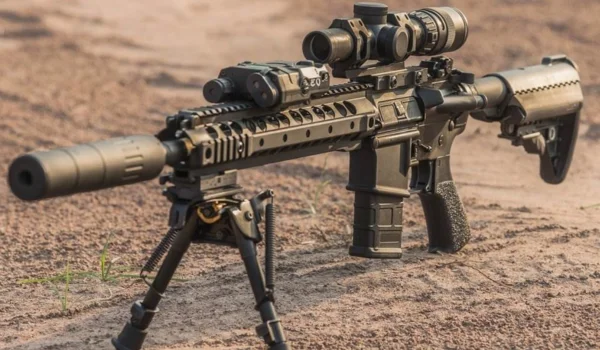
In California, an assault weapon is a legal category, not a general description.
Under California Penal Code §§30500–31115, a firearm can be classified as an assault weapon based on:
- Specific models listed by name
- Certain features combined with magazine type
- Magazine capacity and configuration
A gun can be legal in other states and illegal in California at the same time.
Three Ways a Firearm Becomes an Assault Weapon in California
California law defines assault weapons in three main ways.
- Firearms Banned by Name
California maintains a list of specific makes and models that are banned outright.
If a firearm appears on this list:
- It is considered an assault weapon automatically
- Ownership is generally illegal unless registered during a past window
These lists are very specific and updated by statute.
- Feature-Based Assault Weapons (Most Common)
This is where most confusion happens.
A semi-automatic, centerfire rifle becomes an assault weapon if it:
- Uses a detachable magazine, and
- Has one or more restricted features
Restricted features include:
- Pistol grip
- Thumbhole stock
- Folding or telescoping stock
- Flash suppressor
- Forward pistol grip
Important:
It’s the combination of features + detachable magazine that triggers the ban.
- Magazine-Based Assault Weapons
A firearm may also qualify if it:
- Has a fixed magazine that holds more than 10 rounds
California strictly limits magazine capacity, even for otherwise legal firearms.
Handguns and Shotguns as Assault Weapons
Assault weapon laws are not limited to rifles.
Handguns
A semi-automatic handgun may be an assault weapon if it has:
- A detachable magazine outside the grip
- A threaded barrel
- A second handgrip
Shotguns
Certain shotguns qualify if they:
- Are semi-automatic
- Have folding stocks or pistol grips
- Can accept detachable magazines
What Is Legal in California?
Many firearms are still legal when configured correctly.
Legal options often include:
- Featureless rifles (no restricted features)
- Fixed-magazine rifles holding 10 rounds or fewer
- Traditional rifles and shotguns
- Most bolt-action firearms
Compliance depends on configuration, not just the gun itself.
Registration and Past Deadlines
California previously allowed limited registration periods for assault weapons.
If someone:
- Missed the registration deadline
- Owns an unregistered assault weapon
They may now be in illegal possession, even if the firearm was once legal.
There is currently no open registration window.
Penalties for Violating California Assault Weapons Laws
Possessing an illegal assault weapon is a serious offense.
Possible penalties include:
- Misdemeanor or felony charges
- Up to 3 years in state prison
- Large fines
- Permanent loss of firearm rights
- Seizure and destruction of firearms
Felony convictions carry lifelong consequences.
Transporting and Storing Assault Weapons
Even legally registered assault weapons have strict rules:
- Must be unloaded
- Transported in locked containers
- Cannot be loaned or sold freely
- Limited locations for use
Violating transport rules can lead to criminal charges.
Selling or Transferring Assault Weapons
In most cases:
- Assault weapons cannot be sold or transferred within California
- Transfers to heirs are highly restricted
- Moving into California with an assault weapon is illegal
Federal law does not override California’s restrictions.
Defenses in Assault Weapon Cases
Common legal defenses include:
- Firearm does not meet assault weapon definition
- Improper police search or seizure
- Firearm was legally configured
- Lack of knowledge combined with compliance efforts
Because definitions are technical, expert legal review is critical.
Civil and Administrative Consequences
Beyond criminal penalties, violations can result in:
- Firearm confiscation
- Loss of concealed carry permits
- Professional license issues
- Immigration consequences for non-citizens
These consequences often extend far beyond court fines.
Why California Has Assault Weapons Laws
California lawmakers argue these laws:
- Reduce mass shooting risks
- Limit high-capacity firepower
- Promote public safety
Supporters see them as preventative; critics argue they are complex and restrictive. Regardless of opinion, compliance is mandatory.
Common Myths About California Assault Weapons
Myth: “If it looks legal, it is legal.”
Truth: Appearance doesn’t matter—features do.
Myth: “Federal law allows it, so California must.”
Truth: California can enforce stricter rules.
Myth: “I didn’t know, so I’m safe.”
Truth: Lack of knowledge is usually not a defense.
Frequently Asked Questions (FAQ)
Are assault weapons completely banned in California?
Most are banned unless legally registered during past windows.
Are AR-15 rifles illegal in California?
Some configurations are illegal; others are legal if compliant.
Can I bring my assault weapon into California?
No. Importing assault weapons is illegal.
Is possession a felony?
It can be charged as either a misdemeanor or felony.
Can charges be reduced?
Sometimes, depending on facts and compliance steps.
Final Thoughts
California assault weapons law is highly technical, strictly enforced, and unforgiving of mistakes. A firearm that is legal in one state may lead to serious criminal charges in California.
For everyday residents, the key is understanding configuration rules. For legal professionals, careful analysis of statutory definitions is essential. When it comes to California firearms law, details matter—and small details can make a big legal difference.