A brain injury can affect far more than a person’s physical health. Depending on its severity, a traumatic brain injury (TBI) can affect memory, concentration, communication, mobility, employment, relationships and the ability to perform everyday activities.
The Centers for Disease Control and Prevention (CDC) reports that TBI is a major cause of death and disability in the United States. Recent CDC data show approximately 214,110 TBI-related hospitalizations in 2020 and 68,663 TBI-related deaths in 2023. These figures do not include many TBIs treated in emergency departments, primary care settings or those that go untreated.
A brain injury law firm represents individuals who may have suffered a brain injury because of another person’s negligence, a dangerous condition, a defective product or another legally actionable event. These cases can be particularly complicated because the consequences of a brain injury may continue for years or even become permanent.
This guide explains what a brain injury law firm does, the types of cases it handles, common causes of TBI, compensation, evidence, attorney fees, legal deadlines and how to choose a lawyer.
What Is a Brain Injury Law Firm?
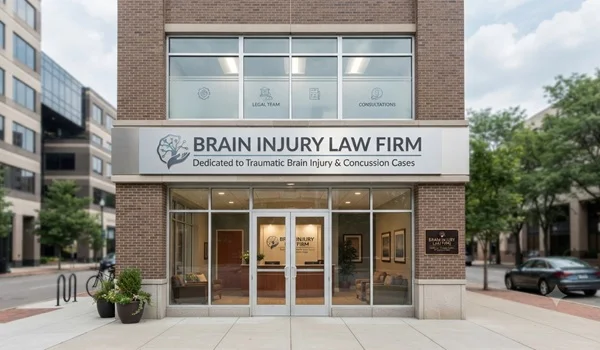
A brain injury law firm is a personal injury practice that focuses on claims involving traumatic brain injuries and related neurological injuries.
A firm may handle cases involving:
- Car accidents
- Truck accidents
- Motorcycle accidents
- Pedestrian accidents
- Bicycle accidents
- Slip and fall accidents
- Construction accidents
- Workplace-related incidents
- Sports-related injuries
- Defective products
- Premises liability
- Assault-related injuries
- Nursing home negligence
- Wrongful death
Not every brain injury is automatically a legal claim. Generally, the facts must establish a legally recognized basis for holding another person or entity responsible.
What Is a Traumatic Brain Injury?
A traumatic brain injury occurs when a bump, blow or jolt to the head—or a penetrating head injury—disrupts normal brain function. The CDC identifies mild TBI or concussion, moderate TBI and severe TBI as broad categories.
Moderate and severe TBIs can result in long-term or lifelong health problems and may require ongoing medical care and rehabilitation.
Importantly, the seriousness of a brain injury cannot always be determined simply by looking at someone immediately after an accident. Some symptoms may become apparent later, which makes appropriate medical evaluation important.
What Does a Brain Injury Lawyer Do?
A brain injury attorney may handle several aspects of a legal claim.
Investigating the Accident
The lawyer may investigate:
- How the accident happened
- Where the accident occurred
- Who was involved
- Whether witnesses were present
- Whether video footage exists
- Whether a police or accident report was created
- Whether another party violated a safety requirement
- Whether another person or organization may share responsibility
The investigation can be particularly important when the other party disputes responsibility.
Reviewing Medical Evidence
Brain injury claims often require extensive medical documentation.
An attorney may review:
- Emergency-room records
- Hospital records
- CT or MRI results
- Neurological evaluations
- Neuropsychological testing
- Rehabilitation records
- Physical therapy records
- Occupational therapy records
- Speech therapy records
- Medication records
- Future-care recommendations
Medical experts may also be necessary to explain the injury and its likely consequences.
Establishing Liability
A lawyer may investigate whether the injury resulted from:
- Negligent driving
- A dangerous property condition
- Unsafe working conditions
- A defective product
- Inadequate security
- Another person’s negligent conduct
- Other legally actionable circumstances
The applicable legal theory depends on the facts and state law.
Calculating Long-Term Damages
This is especially important in serious TBI cases.
A person may require medical care, rehabilitation, assistance with daily activities or modifications to their home or vehicle. They may also be unable to return to their previous occupation.
A lawyer may work with medical, vocational and financial experts to document these potential losses.
Negotiating With Insurance Companies
A brain injury law firm can communicate with insurers, provide supporting documentation and negotiate a potential settlement.
Insurance companies may question:
- Whether the accident caused the brain injury
- Whether symptoms are related to the accident
- The severity of the injury
- The amount of treatment required
- Future medical expenses
- Lost income
- Future earning capacity
Strong medical and factual documentation can therefore be important.
Common Causes of Brain Injury
Car Accidents
Motor vehicle crashes are a significant source of traumatic brain injuries. The CDC identifies motor vehicle crashes among the common mechanisms through which moderate and severe TBIs occur.
Truck Accidents
Collisions involving commercial trucks can result in substantial forces and serious head injuries.
A claim may involve the truck driver, trucking company, vehicle owner, insurer or other potentially responsible parties depending on the circumstances.
Motorcycle Accidents
Motorcycle riders are particularly exposed to direct impacts and may suffer serious head injuries in crashes.
Helmet use and applicable state law can become relevant issues in some cases, but they do not automatically determine liability in every accident.
Pedestrian Accidents
A pedestrian struck by a vehicle can experience significant head trauma.
The legal claim may involve questions about speed, right-of-way, traffic signals, visibility and driver conduct.
Slip and Fall Accidents
Falls are a major source of TBI-related hospitalization. The CDC identifies falls as a leading cause of moderate and severe TBI, particularly among older adults.
A premises liability claim may arise when a dangerous condition on property contributed to the fall, depending on state law and the circumstances.
Workplace and Construction Accidents
Falls from heights, falling objects, equipment incidents and other workplace accidents can cause traumatic brain injuries.
Workers’ compensation rules may apply, and there may sometimes be additional claims against third parties depending on the circumstances.
Sports Injuries
Contact sports and recreational activities can result in concussions and other brain injuries.
Whether a particular injury creates a legal claim depends on factors such as the circumstances, applicable law, agreements and potentially the conduct of other parties.
Symptoms and Effects of Brain Injuries
Brain injuries can have physical, cognitive, emotional and behavioral effects.
Possible effects can include:
- Headaches
- Dizziness
- Balance problems
- Memory difficulties
- Difficulty concentrating
- Speech or communication problems
- Fatigue
- Sleep problems
- Changes in mood
- Difficulty performing everyday tasks
- Changes in mobility
- Seizures
- Long-term cognitive impairment
The effects vary considerably from person to person. The CDC notes that moderate and severe TBI can produce chronic health problems and affect many areas of life.
When Should You Hire a Brain Injury Lawyer?
A consultation with an attorney may be particularly useful when:
- The brain injury is moderate or severe.
- The person was hospitalized.
- Surgery or rehabilitation is required.
- The injury has affected employment.
- Permanent impairment is possible.
- Future medical care may be required.
- Liability is disputed.
- Multiple parties may be responsible.
- An insurance company has denied the claim.
- The insurer is disputing the severity of the injury.
- The injured person is a child.
- The accident resulted in death.
A serious brain injury can involve long-term consequences, so evaluating only the immediate medical bills may not provide a complete picture of the potential claim.
What Compensation Can a Brain Injury Lawyer Pursue?
The damages available depend on the facts of the case and applicable state law.
Medical Expenses
Potential damages may include qualifying expenses for:
- Emergency treatment
- Hospitalization
- Surgery
- Neurological care
- Diagnostic testing
- Medication
- Rehabilitation
- Physical therapy
- Occupational therapy
- Speech therapy
- Future medical care
Lost Income
If the injury prevents someone from working, documented lost wages may be part of the claim.
Loss of Future Earning Capacity
This can be particularly important in TBI cases.
A person who can no longer perform their previous occupation may experience substantial future financial losses.
Evidence may include:
- Previous earnings
- Education
- Work history
- Medical restrictions
- Vocational assessments
- Economic projections
Future Care Costs
Someone with a serious TBI may need ongoing assistance, rehabilitation or medical treatment.
Future-care costs can sometimes represent a substantial portion of a serious injury claim.
Pain and Suffering
Depending on state law, compensation may also be available for physical pain and certain emotional or non-economic losses.
Disability
Permanent cognitive, physical or neurological limitations may be relevant to damages where permitted by law.
Loss of Quality of Life
Some jurisdictions recognize damages associated with the impact an injury has on a person’s ability to participate in ordinary activities and enjoy life.
How Much Is a Brain Injury Case Worth?
There is no standard settlement amount for a brain injury case.
The value can vary substantially depending on:
- Severity of the TBI
- Whether the injury is permanent
- Age of the injured person
- Medical treatment
- Future medical needs
- Lost income
- Future earning capacity
- Need for personal assistance
- Evidence of liability
- Insurance coverage
- Applicable state law
- The injured person’s potential share of fault
For example, a concussion that resolves relatively quickly can involve very different damages from a severe TBI requiring lifelong assistance.
This is why a settlement figure from another brain injury case should not automatically be used to estimate the value of a different claim.
Why Brain Injury Cases Can Be Difficult to Prove
Some brain injuries are easier to document than others.
A serious injury visible on imaging may provide substantial medical evidence. However, symptoms can sometimes be less obvious, particularly with certain mild TBIs.
This can create disputes about:
- Whether a TBI occurred
- Whether the accident caused it
- Whether symptoms existed before the accident
- Whether symptoms are consistent with the diagnosed injury
- Whether treatment is reasonable and necessary
- Whether the injury affects future earning capacity
Medical records, treating physicians, specialists and appropriate expert testimony can therefore become important.
Evidence in a Brain Injury Claim
A brain injury lawyer may collect several categories of evidence.
| Evidence | Potential purpose |
| Accident report | Documents the incident |
| Photographs | Shows the accident scene and visible injuries |
| Video footage | May show how the accident occurred |
| Witness statements | Supports disputed facts |
| CT/MRI records | Documents relevant medical findings |
| Neurological records | Documents diagnosis and treatment |
| Neuropsychological testing | May document cognitive effects |
| Rehabilitation records | Shows treatment and functional limitations |
| Medical bills | Documents financial losses |
| Employment records | Establishes lost income |
| Expert opinions | May address causation, prognosis and future needs |
Preserving evidence early can be particularly important because surveillance footage, electronic records and witness recollections may not remain available indefinitely.
How Much Does a Brain Injury Lawyer Cost?
Many personal injury attorneys use contingency fee agreements.
Under a contingency arrangement, the lawyer generally receives an agreed percentage of the recovery instead of charging a conventional hourly rate.
The exact fee structure varies by lawyer and jurisdiction.
Before hiring an attorney, ask:
- What percentage is the contingency fee?
- Does the percentage change if litigation begins?
- How are case expenses handled?
- Are expenses deducted before or after the attorney fee?
- What happens if there is no recovery?
- Are medical liens or reimbursement claims deducted from the settlement?
Always review the written representation agreement carefully.
How to Choose a Brain Injury Law Firm
Brain injury cases can require more specialized investigation than some straightforward personal injury claims.
Look for Relevant Experience
Ask whether the firm regularly handles traumatic brain injury cases.
Ask About Serious Injury Cases
If the injury involves permanent disability, cognitive impairment or extensive rehabilitation, ask about the firm’s experience with comparable cases.
Consider Medical Knowledge
The lawyer does not need to be a medical professional, but experience working with neurologists, rehabilitation specialists, neuropsychologists and life-care experts can be relevant in complex cases.
Check State Licensing
Make sure the attorney is licensed to practice in the jurisdiction relevant to the claim.
Understand the Fee Agreement
Ask for a clear explanation of attorney fees and litigation expenses before signing.
Evaluate Communication
Find out:
- Who will handle the case?
- Will you communicate directly with the attorney?
- How often will you receive updates?
- Who answers questions about medical records and insurance?
Questions to Ask a Brain Injury Lawyer
Before hiring a law firm, consider asking:
- How many traumatic brain injury cases have you handled?
- Have you handled cases involving similar injuries?
- What evidence would you need from me?
- What medical experts may be necessary?
- How will you establish that the accident caused the brain injury?
- What deadlines apply to my claim?
- What types of damages may be available?
- How is your contingency fee calculated?
- What additional expenses could I be responsible for?
- Who will personally handle my case?
- What happens if the insurance company disputes the injury?
- Do you have experience taking serious TBI cases to trial?
What Happens After Hiring a Brain Injury Law Firm?
A serious TBI claim may follow this general process:
Initial consultation
↓
Accident investigation
↓
Medical record collection
↓
Liability analysis
↓
Assessment of current and future damages
↓
Insurance claim
↓
Settlement negotiations
↓
Lawsuit, if necessary
↓
Discovery and expert testimony
↓
Settlement or trial
Not every case follows every stage.
Some claims settle before a lawsuit is filed. Others require litigation because the parties disagree about liability, causation or damages.
Brain Injury Statute of Limitations
A brain injury claim must generally be filed within the applicable statute of limitations, but there is no single deadline that applies throughout the United States.
The deadline can vary based on:
- State
- Type of legal claim
- Whether a government entity is involved
- Age of the injured person
- When the injury was discovered
- Wrongful death circumstances
- Other case-specific factors
Because missing a deadline can potentially prevent a lawsuit from proceeding, the applicable state’s limitation period should be determined as early as possible.
How to Find a Brain Injury Law Firm Near You
People searching for a brain injury lawyer commonly use terms such as:
- Brain injury law firm near me
- Brain injury lawyer near me
- Traumatic brain injury lawyer
- TBI attorney
- Brain injury attorney
- Traumatic brain injury law firm
- Brain injury lawyers
- Head injury lawyer
- TBI lawyers
- Brain injury attorneys
Because personal injury laws differ from state to state, it is important to look for an attorney licensed in the relevant jurisdiction.
Frequently Asked Questions
What does a brain injury law firm do?
A brain injury law firm represents individuals who have suffered traumatic brain injuries in circumstances that may create legal liability. The firm may investigate the incident, establish liability, document medical and financial losses, negotiate with insurers and pursue litigation.
What types of accidents cause brain injuries?
Common causes include falls, motor vehicle crashes, assaults and other incidents. The CDC identifies falls and motor vehicle crashes among important causes of TBI-related injuries.
Can I file a lawsuit for a concussion?
Potentially. A concussion is generally considered a mild TBI, but whether a legal claim exists depends on how the injury occurred, whether another party may be legally responsible and the applicable state law.
How much is a traumatic brain injury claim worth?
There is no universal amount. The potential value depends on the severity and consequences of the injury, medical expenses, lost income, future care, liability, insurance and applicable law.
Can a brain injury affect future earning capacity?
Yes. A serious TBI can affect cognitive or physical abilities and may limit a person’s ability to work. Future earning losses can therefore become an important part of some claims.
How long does a brain injury lawsuit take?
There is no fixed timeline. Cases involving serious injuries, expert medical evidence, disputed liability or extensive future-damage calculations can take substantially longer than straightforward claims.
Do brain injury cases always go to trial?
No. A claim may settle through negotiations before or after a lawsuit is filed. Whether litigation proceeds to trial depends on the circumstances and the parties’ ability to resolve the dispute.
Conclusion
A traumatic brain injury can create medical, financial and personal consequences that continue long after the original accident. A brain injury law firm can help investigate the circumstances, establish potential liability, document current and future losses and negotiate with insurance companies.
For serious TBI cases, it is particularly important to consider long-term medical needs, future earning capacity, rehabilitation, permanent impairment and other continuing consequences, rather than focusing only on immediate expenses.
When choosing a lawyer, consider experience with traumatic brain injury cases, access to appropriate medical and financial experts, state licensing, communication practices, litigation experience and the complete fee agreement.
Legal Disclaimer: This article is for general educational and informational purposes only. It is not legal advice and does not create an attorney-client relationship. Brain injury laws, statutes of limitations, negligence rules, insurance requirements and available damages vary by state and individual circumstances. Anyone dealing with a serious brain injury should consult a licensed attorney in the applicable jurisdiction for advice about a specific case.