Property line disputes are surprisingly common in California. A fence placed a little too far, a driveway crossing over a boundary, or a neighbor claiming part of your yard can quickly turn into a serious legal issue. Because California real estate is valuable, even a few inches of land can matter.
This guide explains California property line disputes in simple terms, including how boundaries are legally defined, common causes of disputes, and what homeowners and attorneys should do when conflicts arise.
What Is a Property Line Dispute?
A property line dispute happens when two property owners disagree about where one property ends and the other begins.
These disputes often involve:
- Fences or walls
- Trees or hedges
- Garages, sheds, or decks
- Driveways or walkways
- Side yards or shared access areas
In California, these conflicts are handled under real property and civil law, not criminal law.
Why Property Line Disputes Are So Common in California
California has unique conditions that increase boundary conflicts:
- High property values
- Older homes with unclear records
- Hillsides, erosion, and irregular lots
- Dense urban and suburban development
Many disputes start unintentionally and grow worse due to poor communication.
Common Causes of Property Line Disputes
- Incorrect or Missing Surveys
Many homeowners rely on fences or assumptions instead of official surveys.
- Fence Placement Errors
A fence may look permanent but still be in the wrong location.
- Encroachments
A neighbor’s structure (garage, shed, driveway) extends onto your land.
- Tree and Landscaping Issues
Roots, branches, or shared trees cause frequent disputes.
- Easement Confusion
Owners mistake easement rights for ownership.
How Property Boundaries Are Determined in California
California does not rely on guesswork. Courts follow a clear hierarchy:
- Property deeds
- Recorded maps and subdivision plats
- Professional land surveys
- Physical markers (monuments)
- Long-standing boundary agreements
A licensed California land surveyor often plays a key role in resolving disputes.
Why a Survey Is So Important
A professional survey:
- Shows the legal boundary
- Identifies encroachments
- Is accepted as evidence in court
- Helps avoid emotional arguments
Without a survey, most boundary claims are weak.
Encroachments Under California Law
An encroachment happens when part of a property crosses the legal boundary.
Examples include:
- A fence built too far
- A driveway extending onto another lot
- A building overhanging the boundary
California courts consider:
- How long the encroachment existed
- Whether it was intentional
- The harm caused
- The cost of fixing it
Courts may order removal, compensation, or allow it to remain under conditions.
Adverse Possession in California (Simple Explanation)
California allows land ownership through adverse possession, but the rules are strict.
To win an adverse possession claim, a person must prove:
- Open and visible use
- Continuous use for 5 years
- Exclusive control
- Payment of property taxes on the disputed land
Most people do not qualify, making these claims difficult to win.
Boundary by Agreement or Long Acceptance
If neighbors:
- Were unsure of the true boundary
- Agreed (or silently accepted) a boundary line
- Treated it as official for many years
A court may recognize that line as the legal boundary.
This often applies to long-standing fences.
Tree Disputes and Shared Boundaries
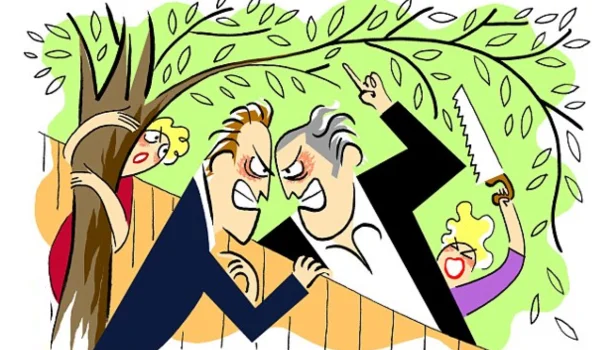
Tree disputes are extremely common in California.
Basic rules:
- A tree on the boundary is usually jointly owned
- You may trim branches crossing your property (without killing the tree)
- Cutting a shared tree without permission can result in damages
Tree laws aim to balance property rights and neighbor relations.
Easements and Access Issues
An easement gives someone the right to use land, not own it.
Common easement disputes involve:
- Shared driveways
- Utility access
- Alleyways or beach access
Blocking a legal easement can lead to court orders and fines.
Can You Remove a Fence Yourself?
Even if a fence is on your land:
- Removing it without agreement or court approval is risky
- You could be sued for damages
California strongly discourages “self-help” solutions.
How California Courts Resolve Property Line Disputes
Courts may:
- Order new surveys
- Declare the legal boundary
- Require removal of structures
- Award damages
- Issue injunctions
Judges often encourage mediation before trial.
Mediation and Settlement Options
Most property line disputes are settled without trial through:
- Mediation
- Written boundary agreements
- Lot line adjustments
- Easement modifications
Settlement saves time, money, and relationships.
Time Limits (Statute of Limitations)
Different claims have different deadlines:
- Adverse possession: 5 years
- Trespass or encroachment claims: often 3 years
Waiting too long can weaken your case.
Does Title Insurance Help?
Title insurance may help only if the dispute involves errors in public records.
Most physical boundary disputes are not covered.
What Homeowners Should Do First
- Review your deed and title papers
- Hire a licensed surveyor
- Document the issue with photos
- Talk calmly with your neighbor
- Consult a California real estate attorney
Early action prevents escalation.
Risks of Ignoring a Boundary Dispute
Ignoring the problem can lead to:
- Loss of land rights
- Forced removal of structures
- Higher legal costs
- Difficulty selling the property
Small issues can become expensive mistakes.
Frequently Asked Questions (FAQ)
Is a fence the legal boundary in California?
No. Deeds and surveys determine boundaries.
Can I claim unused land next to my property?
Only under strict adverse possession rules.
Can I trim my neighbor’s tree?
You may trim overhanging branches without harming the tree.
Should I hire a surveyor or a lawyer first?
Usually a surveyor, then a lawyer.
Final Thoughts
Property line disputes in California are legally complex but manageable with the right approach. Clear documentation, professional surveys, and early communication are key. Whether you are a homeowner or a legal professional, understanding California’s boundary rules helps prevent costly mistakes.